
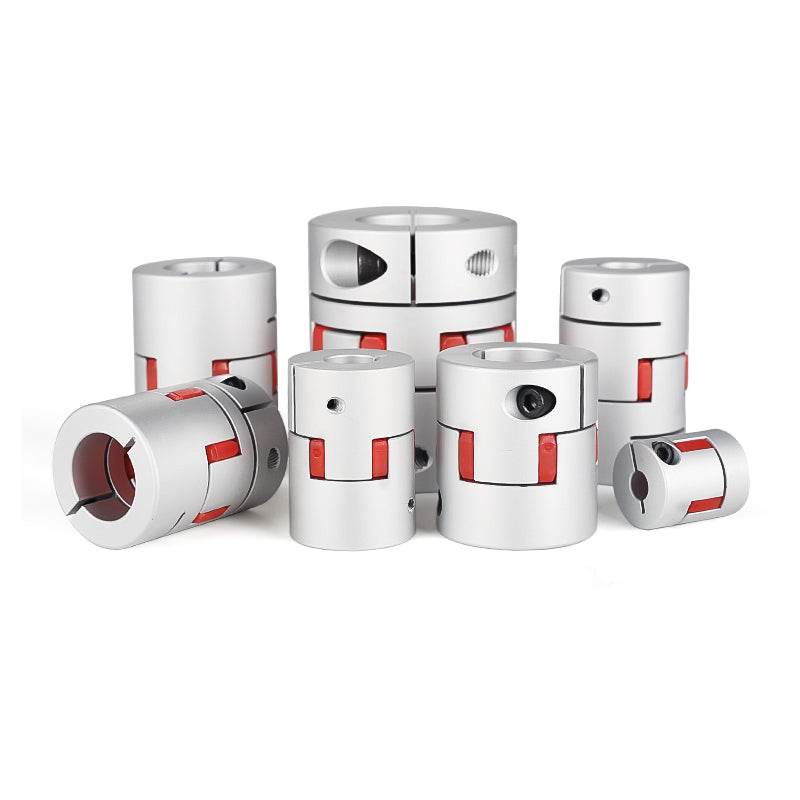
Selecting the correct shaft coupling is essential for reliable power transmission and long-term system performance. An unsuitable coupling may cause vibration, misalignment, premature wear, or even equipment failure.
This guide outlines the key factors to consider when choosing a shaft coupling for industrial and mechanical applications.
1. Understand the Application Requirements
Before selecting a coupling, clearly define the operating conditions of your system:
- Type of equipment (motor, gearbox, lead screw, pump, etc.)
- Operating speed (RPM)
- Transmitted torque
- Installation environment (temperature, dust, moisture)
- Continuous or intermittent operation
These factors determine the basic coupling type and material suitability.
2. Shaft Diameter and Bore Size
Shaft diameter is one of the most critical parameters in coupling selection.
- Measure the actual shaft diameter accurately
- Confirm whether the shaft size is metric or imperial
- Ensure the coupling bore size matches the shaft size exactly
For precision applications, bore tolerance (such as H7) and fit should also be considered to ensure secure mounting and proper concentricity.
3. Misalignment Compensation
In practical installations, some degree of misalignment between shafts is often unavoidable. Common types of misalignment include:
- Angular misalignment
- Parallel (offset) misalignment
- Axial misalignment
Different coupling designs provide different levels of misalignment compensation:
- Rigid couplings: no misalignment compensation
- Flexible couplings: limited compensation depending on design
- Jaw or elastomer couplings: good vibration damping with moderate misalignment tolerance
Selecting a coupling with appropriate flexibility helps protect bearings and connected components.
4. Torque Requirements
The coupling must be rated to handle the maximum torque of the system.
- Consider both nominal and peak torque
- Account for startup and shock loads
- Avoid operating close to the maximum rated torque
A reasonable safety margin ensures stable operation and longer service life.
5. Coupling Type Selection
Common shaft coupling types include:
- Rigid couplings – for precise alignment and high stiffness
- Flexible couplings – for systems with slight misalignment
- Jaw couplings – for vibration damping and noise reduction
- Oldham couplings – for parallel misalignment compensation
- Bellows couplings – for high precision and zero-backlash applications
The final selection should balance alignment capability, torsional stiffness, and application requirements.
6. Material Considerations
Coupling materials affect strength, weight, and durability:
- Aluminum alloys: lightweight and corrosion-resistant
- Carbon steel: high strength and torque capacity
- Stainless steel: suitable for corrosive environments
- Elastomers or polyurethane inserts: vibration damping and shock absorption
Material selection should match both mechanical and environmental conditions.
7. Mounting Method
Common mounting methods include:
- Set screw
- Clamp-style (split)
- Keyway
- Combination designs
Clamp-style couplings generally provide better concentricity and easier installation without damaging the shaft surface.
8. Quality and Inspection
For industrial applications, consistent quality control is essential.
- Precision machining ensures dimensional accuracy
- Bore inspection (such as plug gauge inspection) helps guarantee proper fit
- Stable production processes improve long-term reliability
Selecting a supplier with clear quality standards reduces installation and performance risks.
9. When to Consider Custom Solutions
Standard couplings cover most applications, but custom solutions may be required when:
- Non-standard shaft sizes are used
- Special materials are required
- Installation space is limited
- High torque or precision requirements apply
Discussing these requirements before ordering helps avoid delays and rework.
Conclusion
Choosing the right shaft coupling requires careful consideration of shaft size, misalignment, torque, material, and application conditions. A well-selected coupling improves system performance, reduces maintenance, and extends equipment life.
If you are unsure which coupling best fits your application, consulting technical support before placing an order can help ensure the correct selection.
Need assistance with coupling selection?
Contact our technical team at support@sinoaxisspace.com
