
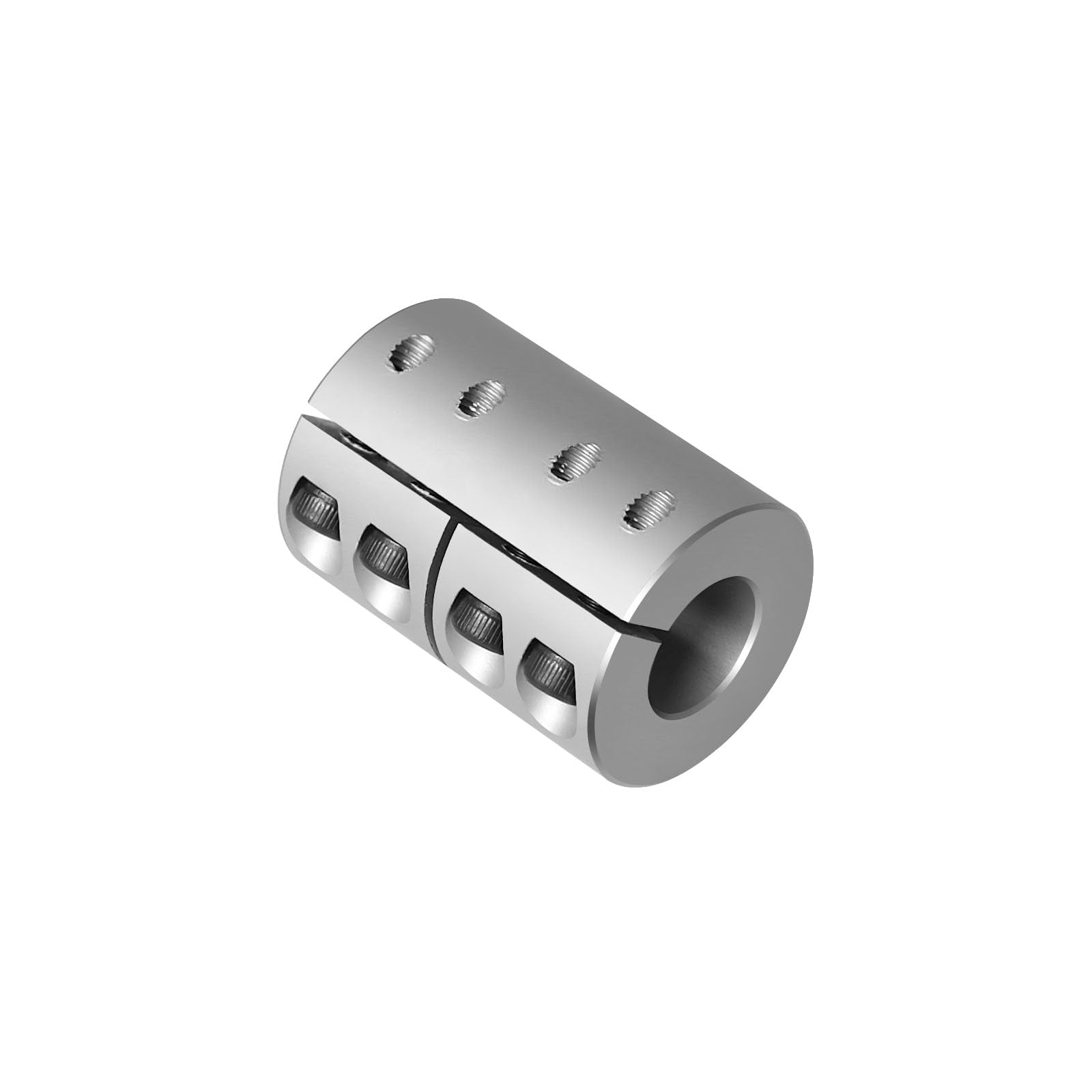
Radial misalignment is a common form of coupling misalignment where two shafts remain parallel but their centerlines do not overlap. If the offset exceeds the allowable range of a shaft coupling (shaft coupler), it can increase vibration, reduce efficiency, and shorten component life.
What Is Radial Misalignment?
A shaft coupling (also called a shaft coupler) connects two rotating shafts to transmit torque. Radial misalignment occurs when the driving and driven shaft centerlines are parallel but laterally offset. Many shaft couplings can tolerate limited misalignment, but excessive offset creates additional forces that affect the entire drivetrain.
1) Effects on Equipment Operation
Increased Vibration
Radial misalignment causes uneven load distribution inside the shaft coupling, generating cyclic forces during rotation. This often leads to higher vibration levels and reduced operating stability.
Elevated Noise
Increased vibration and intermittent impacts can produce abnormal noise. In high-speed or continuous-duty equipment, misalignment-related noise is often more noticeable.
2) Effects on Power Transmission Efficiency
Reduced Efficiency
Radial misalignment increases internal friction and mechanical losses within the shaft coupler, which can reduce power transmission efficiency and raise operating energy consumption.
Stress Concentration
Misalignment introduces additional stresses that concentrate on critical areas such as elastic elements, diaphragm packs, or tooth contact surfaces (depending on coupling type). Over time, this stress concentration accelerates fatigue and wear.
3) Effects on Component Service Life
Shaft Coupling Damage
When radial misalignment exceeds the allowable limits of a shaft coupling, premature failure may occur. Common issues include elastomer fatigue, accelerated wear of contact surfaces, or deformation of flexible components.
Shaft and Bearing Wear
Radial offset can introduce extra bending moments on connected shafts and bearings. This increases bearing load, accelerates wear, and may lead to early bearing failure or shaft damage.
4) Prevention and Best Practices
Select the Right Shaft Coupling
Choose a shaft coupling based on real operating conditions and expected misalignment. If alignment is difficult to maintain, a flexible shaft coupling is typically preferred over a rigid design.
Control Alignment During Installation
Use appropriate alignment methods (for example, dial indicators or laser alignment tools) to ensure radial misalignment remains within the coupling’s specified tolerance.
Routine Inspection and Maintenance
Periodically inspect shaft couplings, shafts, and bearings for signs of abnormal vibration, noise, heat, or wear. Early detection and correction can prevent secondary damage and unplanned downtime.
5) Typical Allowable Radial Misalignment (General Guidance)
Allowable radial misalignment depends on coupling type, size, speed, and load. As general guidance:
- Rigid shaft coupling: minimal to no radial misalignment allowed; precise alignment is required.
- Flexible shaft coupling: commonly tolerates approximately 0.1–0.5 mm radial misalignment.
- Diaphragm or gear couplings: may tolerate larger offsets, sometimes up to or exceeding 1 mm, depending on design and operating conditions.
Conclusion
Radial misalignment is a common form of coupling misalignment that can increase vibration, reduce efficiency, and shorten the service life of a shaft coupling, shafts, and bearings. Proper coupling selection, accurate installation alignment, and routine inspection are key to maintaining reliable operation.